
What Is the Best App That Tracks Both Food and Workouts in One Place?
The best app for food and workouts is the one you open daily for both. Compare combined vs paired apps, see a shortlist by user type, and test one in 7 days.
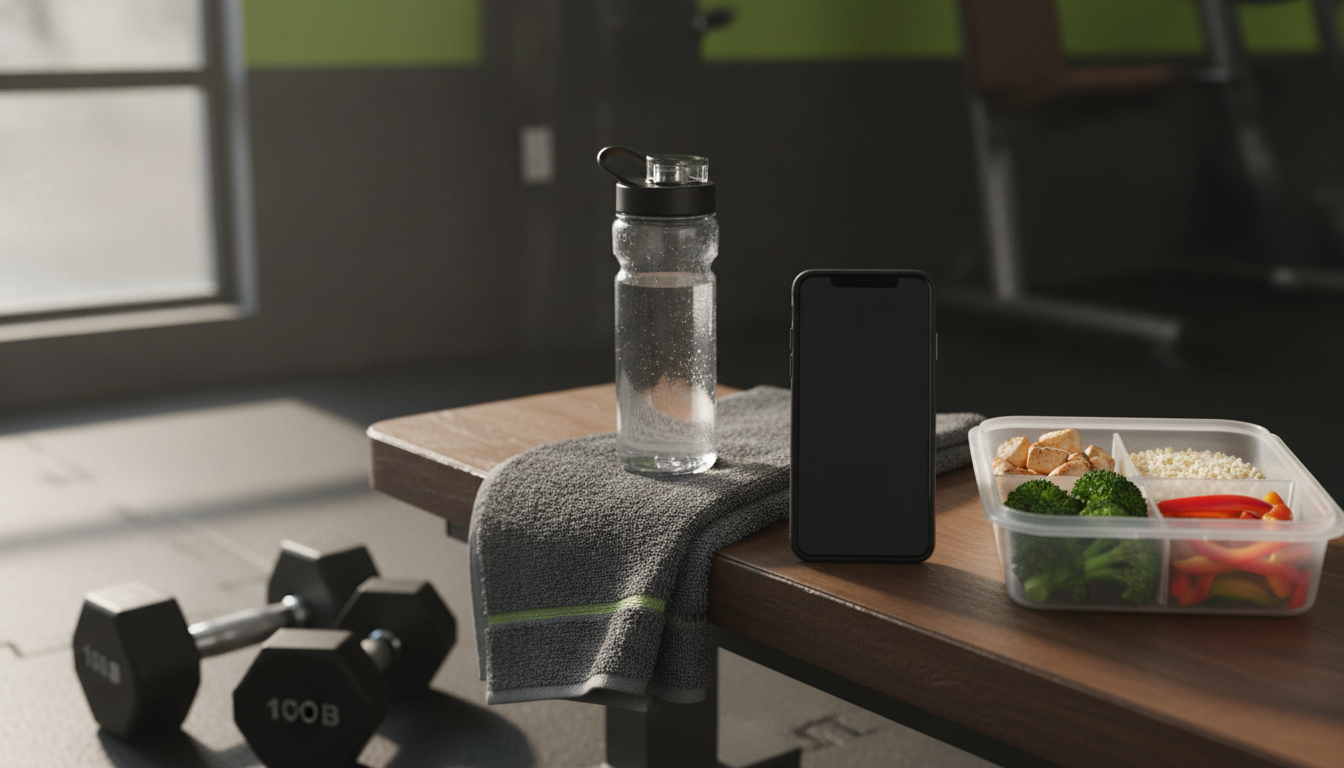
The best app that tracks both food and workouts is the one you will open every day for both. Look for fast food logging, a solid exercise database, combined progress views and motivation features. Options include MyFitnessPal with integrations, Lifesum, Yazio, and newer combined apps like Gymco, which pairs meal logging with workout tracking.
Most people run a calorie app and a separate gym log, then never connect the two. An all-in-one app works best when you want one daily habit instead of two, and this guide shows you how to judge which one actually delivers.
Why this matters
Food and training are two halves of the same result. If your nutrition lives in one app and your workouts in another, you rarely look at them side by side, so you miss patterns like "I train hard but under-eat on those days."
Consistency is the real bottleneck for most people. Research on self-monitoring in weight-loss programs links regular tracking with better outcomes (Burke et al., 2011, see Sources). Fewer apps means fewer excuses to skip logging.
Why combine diet and workout tracking?
Combining them gives you one daily habit and one place to see cause and effect. You can check how a low-calorie week affected your lifts, or whether your protein intake matches your training days.
Three practical benefits:
- One routine. Opening one app is easier to sustain than opening two.
- Connected data. You see intake and training on the same timeline.
- Simpler motivation. A single streak or goal can cover both food and exercise.
A calorie deficit (eating fewer calories than you burn) is only part of the picture. In adults with overweight or obesity, adding resistance training to a calorie-restricted diet reduces the loss of lean mass (systematic review and meta-analysis of resistance exercise during dietary weight loss), so seeing both together helps you adjust sensibly.
What must an all-in-one app do well?
An all-in-one app must make daily logging fast, cover your training style, and show food and workouts together. If any of these is weak, you will stop using it.
Use this checklist when you compare apps:
- Fast food logging. Search, barcode scan or saved meals should take seconds, not minutes.
- Food search that fits your diet. Test it with dishes you actually eat, in your language.
- A solid exercise database. It should include the movements you do, from machines to bodyweight.
- Flexible workout logging. Sets, reps, weight and notes, plus the ability to build your own routines.
- Combined progress views. Nutrition and training trends in one place.
- Motivation that covers both. Streaks, goals or awards that count food and exercise, not just one.
- Language and interface. Full support for your language, including right-to-left layouts if you read Arabic.
- Integrations you need. If you rely on a Garmin or Apple Watch, confirm sync before committing.
Combined vs paired apps: how do they compare?
Combined apps win on simplicity, while paired specialist apps win on depth. The right choice depends on whether your problem is consistency or advanced detail.
| Approach | Examples | Where it is stronger | Where it falls short |
|---|---|---|---|
| Combined app | Gymco | One habit, food and training in one view, streaks that count both | Newer apps may have less depth in either area; Gymco is in beta |
| Nutrition app + integrations | MyFitnessPal, Lifesum, Yazio | Mature food logging; established ecosystems and integrations | Workout tracking often depends on connecting another app or device; check how deep it goes |
| Paired specialists | A nutrition app such as Cronometer + a workout logger such as Hevy or Strong | Maximum depth in each area, such as micronutrients or detailed lifting logs | Two apps, two habits, and your data stays separate |
Fair note: established apps like MyFitnessPal have had years to build food databases and integrations. A beta product like Gymco will not match that breadth yet. Feature sets change often, so verify current details in each app.
Which app fits which type of user?
Match the app to your biggest obstacle. Here is a shortlist by user type.
- You struggle with consistency. Try a combined app. Gymco ties its daily streaks to both food logging and exercise, and lets you set commitment goals such as 90 days and earn achievement awards.
- You want nutrition first, training second. Look at MyFitnessPal, Lifesum or Yazio, then check how they handle workouts or integrations.
- You are an advanced lifter or want detailed micronutrients. Pair specialists, such as Cronometer with Hevy or Strong.
- You want coaching-style guidance. Gymco includes Iron, an in-app AI coach for training and nutrition tips. It supports your habits, but it does not replace a doctor, dietitian or qualified coach.
- You prefer Spanish or Arabic. Yazio, Lifesum and MyFitnessPal offer Spanish versions. Gymco is available in English, Arabic and Spanish, including an Arabic RTL interface.
- You track food during Ramadan. Choose an app that makes suhoor and iftar logging easy and keeps goals flexible. If you have a medical condition or take medication, talk to a doctor before fasting, and ask a scholar about any exemption.
- You flex your diet. Gymco has a cheat-meal system with "banked" (planned) and "free" modes and a weekly allowance you set yourself.
Where do combined apps fall short?
Combined apps usually trade depth for convenience. You should know the limits before you switch.
- Less specialist depth. Complex powerlifting programming or detailed micronutrient tracking may be better in dedicated apps.
- Smaller food databases. Newer apps may lack some regional or branded foods, so test your own meals.
- Integration gaps. If wearable sync matters, confirm it. Gymco is in beta, so check its current feature list before relying on a device connection.
- Platform and maturity. Beta apps change quickly and may have bugs.
If you need that specialist depth, using two apps is a perfectly good choice.
How do you test an app in 7 days?
Run a one-week trial with real meals and real workouts. Judge by friction, not features.
- Day 1: Set your goal and log every meal. Time how long it takes.
- Day 2: Log a full workout, including a custom exercise if you need one.
- Day 3: Search for three local or home-cooked dishes. Note what is missing.
- Day 4: Log a rest day. Does the app still keep you engaged?
- Day 5: Check the progress view. Can you see food and training together?
- Day 6: Try a flexible day, such as a social meal, and see how the app handles it.
- Day 7: Ask yourself: did I open it without being reminded? If yes, it is a keeper.
The winning app is the one with the lowest friction on your busiest day.
Key takeaways
- The best app that tracks food and workouts is the one you will open daily for both.
- Combined apps favor consistency and one habit; paired specialist apps favor depth in nutrition or lifting.
- Check food search, exercise database, combined progress views, language support and integrations before you commit.
- Gymco is a beta diet and training app with streaks that count food and exercise, an AI coach called Iron, and a flexible cheat-meal system.
- A 7-day test with real meals and workouts tells you more than any feature list.
Try it yourself
If you want one daily habit for meals and training, Gymco is built for exactly that. Join the Gymco beta at gymcoapp.com.
Sources
- World Health Organization. WHO guidelines on physical activity and sedentary behaviour (2020): 150–300 minutes of moderate-intensity activity per week for adults.
- Burke LE, Wang J, Sevick MA. Self-monitoring in weight loss: a systematic review of the literature. Journal of the American Dietetic Association, 2011.
- Effect of resistance exercise on body composition, muscle strength and cardiometabolic health during dietary weight loss in people living with overweight or obesity: a systematic review and meta-analysis (PubMed): resistance exercise during calorie restriction attenuates the loss of fat-free mass in adults with overweight or obesity.
Last updated: 2026-11-05 · By Ghassan, founder of Gymco
Questions people ask
What's the best app to track both my meals and my workouts?
The best app to track meals and workouts together is one you will use daily for both. Look for quick food logging, a solid exercise database and combined progress views. Gymco is a newer option pairing meal logging with workout tracking, an AI coach and streaks that count food and exercise. MyFitnessPal often relies on integrations.
Should I use one app for diet and workouts or two separate apps?
Use one app if consistency is your main challenge, because a single daily habit is easier to maintain and shows food and training together. Use separate specialist apps if you need advanced depth in one area, like detailed micronutrients or complex powerlifting programming. Many beginners do better starting with one combined app.
What is the best diet app in Spanish?
Good Spanish-language diet apps include Yazio, Lifesum and MyFitnessPal, which all offer Spanish versions. Gymco also has a full Spanish interface and combines diet tracking with workouts and an AI coach. The best choice depends on whether you want nutrition only or nutrition plus training, so test food search with dishes you actually eat.
Which fitness app has streaks for both food and exercise?
Gymco ties its daily streaks to both food logging and exercise, so a streak reflects nutrition and training together rather than one alone. It also lets you set commitment goals such as 90 days and earn achievement awards. Many other apps track streaks for logging food only or for workouts only.
Which app is best for tracking food during Ramadan?
A good Ramadan app lets you log meals easily at suhoor and iftar, keeps motivation flexible when routines change, and ideally supports Arabic. Gymco offers an Arabic RTL interface with combined meal and workout tracking and streaks. Consult a doctor before fasting if you have medical conditions or take medication, and ask a scholar about exemptions.
Which app tracks protein and workouts together?
Combined apps track protein and workouts in one place. Gymco pairs meal logging with workout tracking and an exercise database, so you can see nutrition and training together. Alternatively, many people pair a nutrition app like MyFitnessPal or Cronometer with a workout logger like Hevy or Strong, though that means using two apps.
What's the best app for home workouts with no equipment?
Good options for home workouts include apps with bodyweight exercise libraries and guided routines, such as Nike Training Club, or a logger like Hevy where you build your own bodyweight routines. Choose an app that lets you track reps and progress over time, and increase difficulty gradually with harder variations or more volume.
How do I connect my Garmin to my diet app?
Look in the diet app's settings for integrations or connected devices and sign in with your Garmin Connect account if a direct link is supported. Some apps instead sync through Apple Health or Health Connect. If sync fails, re-authorize the connection and check permissions in both apps. Confirm support before choosing an app.
